
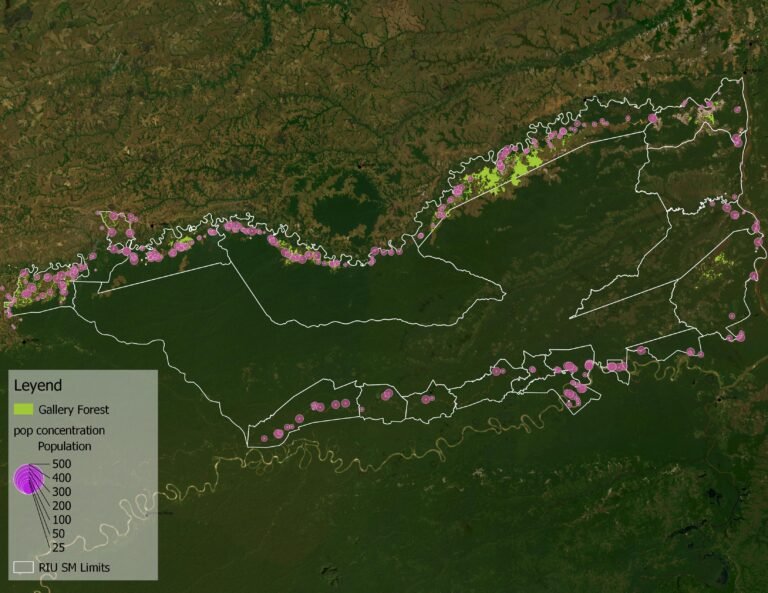
The gallery forests of the Selva Matavén Indigenous Reserve are among the most valuable and fragile ecosystems in the entire Orinoquía–Amazon transition zone. Although they cover only 26,835 hectares within a territory of nearly two million, these linear forests sustain water, biodiversity and daily life for most Indigenous communities. They are essential to understanding conservation in Matavén and the work led by the REDD+ Matavén Project.
Traveling along the Vichada River, the landscape opens into vast savannas, luminous rivers and quiet forests. Within this scenery, gallery forests appear as green corridors that feed life across the territory. They are not the largest forests in Matavén, yet they are among the most decisive. They regulate water, connect ecosystems and support the food security of thousands of Indigenous families.
More than 15,267 people (≈69%) live around these forests, distributed across 281 communities, equivalent to 76% of all settlements in the territory. Their homes are located here because these forests offer water, shade, fresh soils, fishing resources and essential materials for daily life.
A Unique Ecosystem Between the Orinoquía and the Amazon
Matavén gallery forests grow in an ecological transition zone where Amazonian, Guianan and savanna species converge. Life is felt immediately beneath their humid canopy: endemic bird calls, filtered light and a microclimate that sharply contrasts with the open savanna.
Some of the most sensitive species that depend on these forests include the sword-billed hummingbird (Ensifera ensifera), the plumbeous euphonia (Euphonia plumbea) and the Orinoco piculet (Picumnus pumilus). Further north, these forests follow the course of the Vichada River and its tributaries as they approach the Orinoco, functioning as living biogeographical bridges.
Structurally, gallery forests are deep ecosystems with five to six vegetation strata and trees reaching 27 to 40 meters in height, despite growing on nutrient-poor, acidic soils. Sites such as Caño Colonia record a Margalef index of 20.63 and floristic dissimilarities of up to 97%, evidence of exceptional diversity within the territory.
Drivers of Gallery Forest Degradation in Matavén
- Agricultural pressure and human settlements: Nearly 69% of traditional conucos (Indigenous cultivation plots) are located within these forests due to their fresh soils and reliable water. When the forest is fragmented, water, fish and essential household materials decline.
- Savanna fires: Every summer, fires advance from open savanna areas toward drainage zones, threatening gallery forests and leaving scars that take years to recover.
- High accessibility: Because communities are located along these forests, resource extraction is constant, increasing pressure on vegetation and wildlife.
What Is a Gallery Forest?
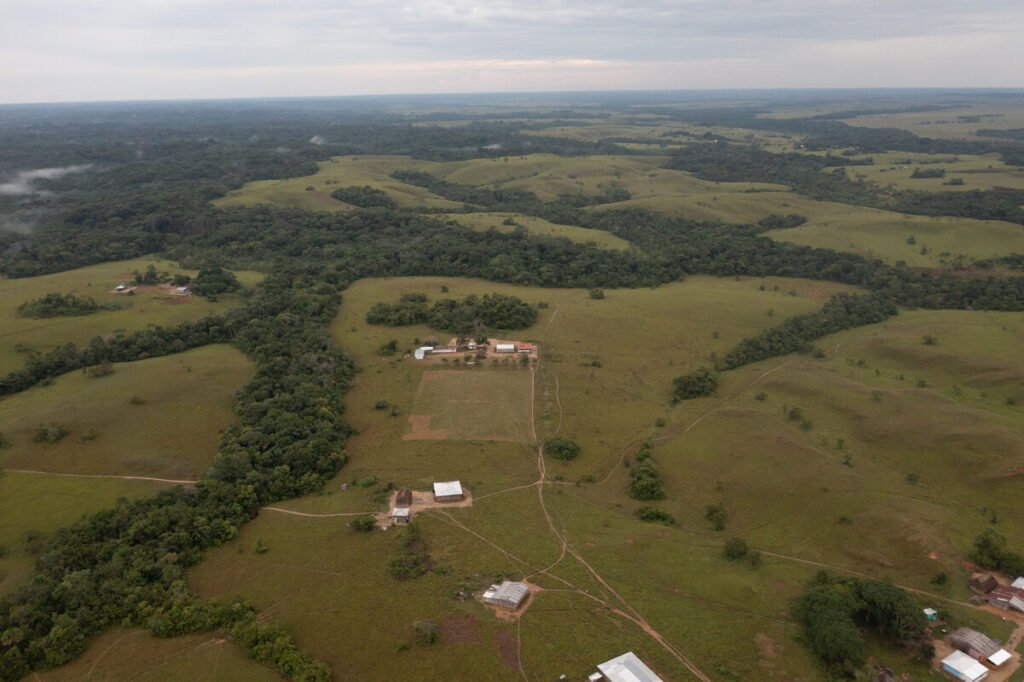
Gallery forests grow exclusively along rivers, streams and creeks, forming natural biodiversity corridors and acting as the hydrological veins of the territory. In Matavén, two main variants exist:
- Non-flooded gallery forests, found in higher areas
- Flooded gallery forests (rebalses), inundated from May to August
Together, they create a unique ecological mosaic in Colombia where rare species and biological processes coexist.
Ecological and Cultural Importance of Gallery Forests
Water regulation
- Protect springs and drainage systems
- Retain moisture during dry seasons
- Maintain hydrological balance across savannas and rivers
Biodiversity hotspots
- Refuge for wildlife during dry periods
- Key breeding sites for fish, birds and mammals
- Higher species density than surrounding savanna ecosystems
Indigenous food security
- Home to most conucos
- Source of medicinal plants
- Provide materials for crafts, housing and daily use
Ecological connectivity
- Link savannas, morichales, rebalses and primary forests
- Serve as corridors for large mammals
Consequences of Gallery Forest Loss
When gallery forests degrade, the entire ecological and cultural structure of the territory weakens. Critical impacts include:
- Reduction of springs and creeks
- Increased soil temperature in savannas
- Loss of wildlife corridors
- Lower availability of fruits, seeds and food for birds and fish
- Decline in water supply, fishing and food security for communities
- Loss of key fish-breeding areas in the Vichada River
- Erosion of traditional knowledge related to forest management
Actions of the REDD+ Matavén Project to Protect Gallery Forests
Direct conservation actions
- Natural restoration of degraded areas
- Participatory declaration of High Conservation Values (HCV)
- Patrols by the Indigenous Guard
- Continuous technical and community-based monitoring
Measures to reduce pressure
- Provision of durable roofing materials that replace moriche palm
- New conucos and farm plots established in savanna areas
- Fish-farming projects that reduce pressure on flooded forests
- Use of sustainable materials to replace forest-derived resources
A Small Ecosystem Supporting an Immense Territory
Gallery forests are fragile, limited in area and essential. More than 69% of Matavén Indigenous families rely on them for water, food, fishing and cultural practices. Protecting them is vital to safeguarding the ecological and cultural continuity of this unique territory.
“Protecting gallery forests means protecting the water, the culture and the life of Matavén. Each carbon credit you acquire supports this conservation.”