

Forest conservation is also strengthened when families living in the territory have access to sustainable productive alternatives. In Matavén, the Agroforestry Cacao Project shows how climate finance can become local capacities, food security, and new sources of income, while helping keep the forest standing.
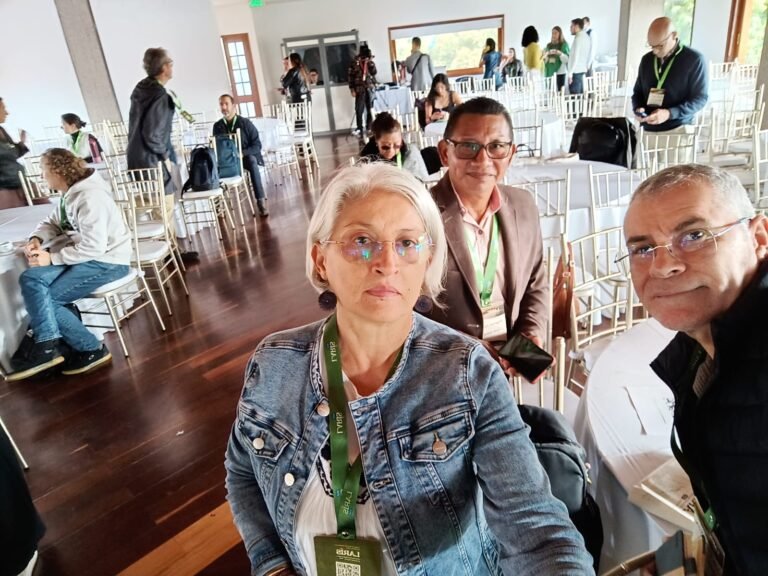
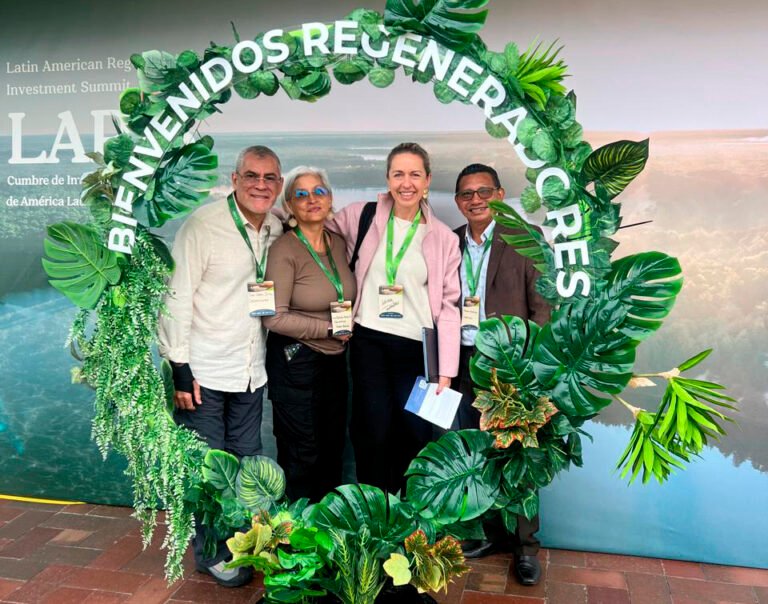
We participated in LARIS 2026, the Latin American Regenerative Investment Summit, a space that brought together actors connected to climate finance, impact investment, corporate sustainability, and nature-based solutions.
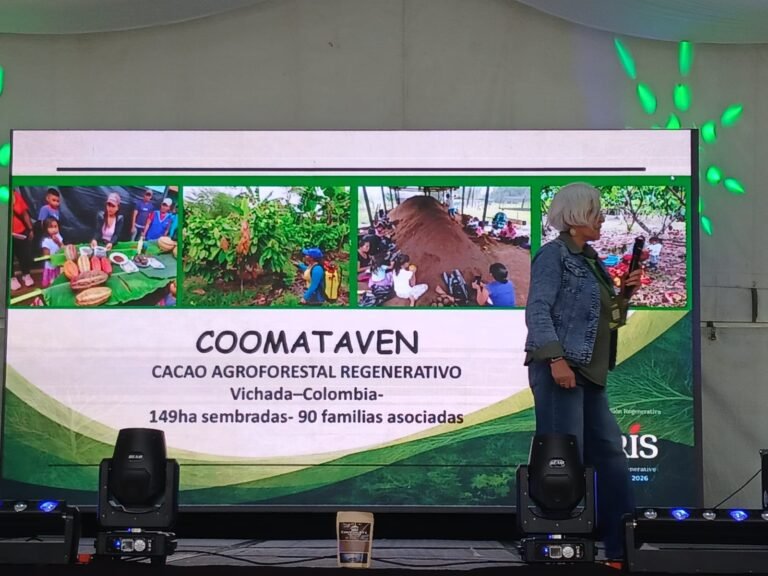
In this setting, the Coomatavén cooperative presented the Agroforestry Cacao Project, an initiative promoted by the REDD+ Matavén Project. Its purpose is clear: to strengthen sustainable livelihoods, promote local production, and help reduce pressure on forest ecosystems.
Agroforestry Cacao: A Productive Commitment to Keeping the Forest Standing
The Agroforestry Cacao Project began in 2019 as part of REDD+ Matavén’s actions to create economic alternatives compatible with conservation. It is currently being developed in partnership with Fundación Granja Tarapacá.
The project is benefiting 145 producer families and has reached 149 hectares planted. This process has included the delivery of inputs and tools, permanent technical assistance, continuous training in agroecological practices, cacao plant production, and the installation of productive infrastructure, such as nurseries and post-harvest processing centers.
Agroforestry cacao has become a pathway to strengthen community organization, advance transformation and commercialization, diversify family income, and contribute to food security in the territory.
Climate Finance Turned Into Local Capacities
The Agroforestry Cacao Project reflects one of the ways REDD+ Matavén reinvests the resources generated through forest conservation. This model promotes the social and economic conditions needed to make long-term conservation viable.
Agroforestry makes it possible to integrate crops with trees and sustainable management practices. This approach helps protect soils, maintain vegetation cover, make better use of the territory, and reduce pressure on natural forests.
In this way, cacao from Matavén connects three key goals: conserving the forest, strengthening the economic and food security of families, and creating new productive opportunities built from within the territory.
LARIS 2026: An Opportunity to Scale What Has Been Built Since 2019
Participation in LARIS 2026 represents an opportunity to make visible and scale the work developed since 2019. It also connects Matavén’s agroforestry cacao with networks focused on regenerative investment, responsible commercialization, corporate sustainability, and impact finance.
This space opens new possibilities to strengthen transformation, expand commercialization channels, and consolidate partnerships that can take the project into a new stage.
For REDD+ Matavén, agroforestry cacao shows that forest protection can move forward alongside community well-being, economic autonomy, and the strengthening of local capacities.
Learn more about the Agroforestry Cacao Project here.